The Architecture of Innovation
Across Latin America, REIN is building the conditions entrepreneurs need to move from local knowledge to global opportunity.

Infrastructure
REIN is not framed as a short-term accelerator, but as a regional structure designed to outlast individual programmes.
Universities
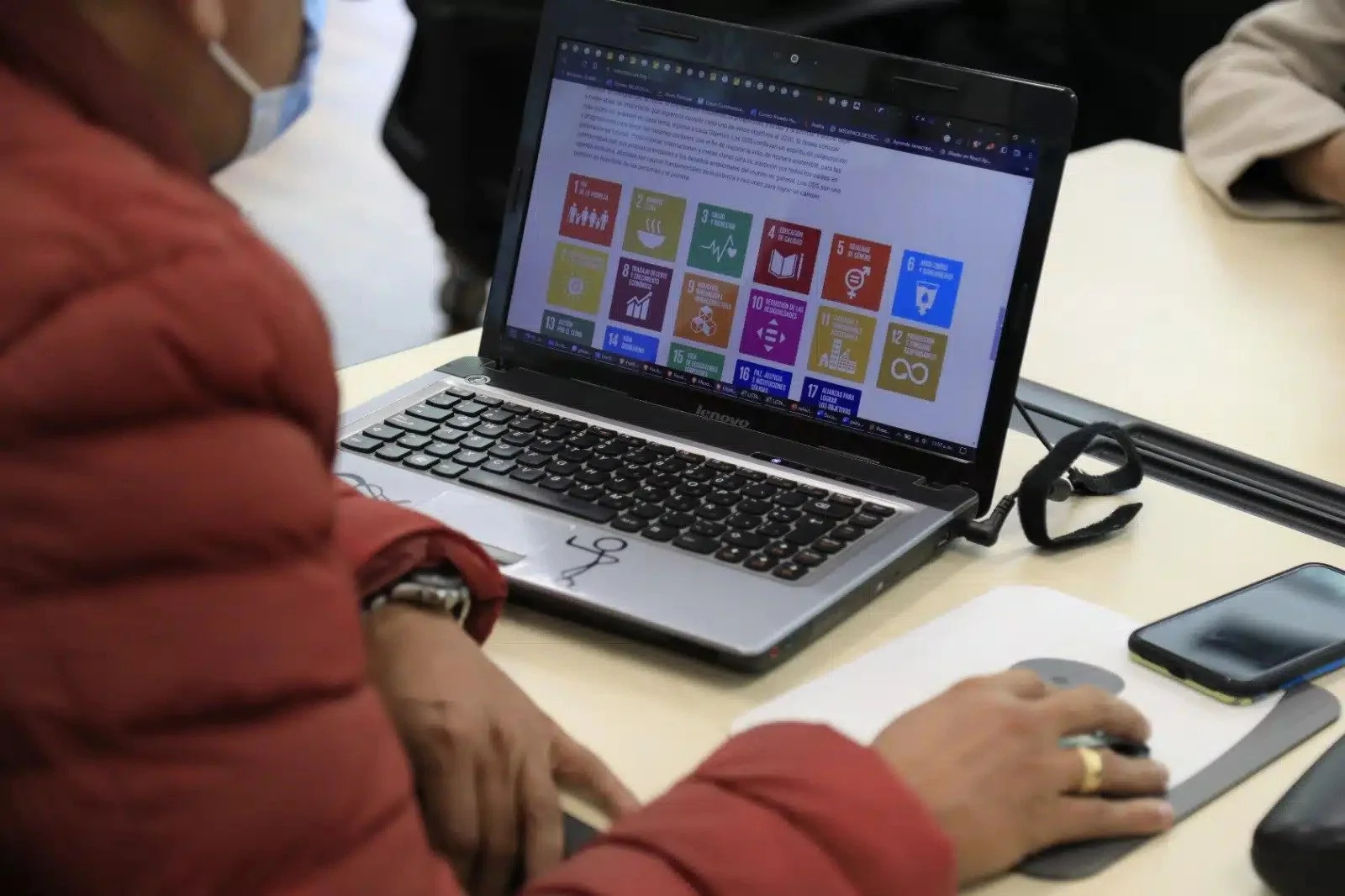
Its hubs are anchored in universities, creating trusted spaces where entrepreneurs, investors and public institutions can meet.
Connection
The model is built around access: to capital, mentorship, institutional support, markets and global networks.
Innovation rarely happens in isolation and it is seldom the work of one founder, one investor, one institution, or one idea alone. More often, it emerges from a wider ecosystem: the network of relationships, trust, infrastructure, knowledge, capital, and access that allows an idea to move from possibility into permanence. This is the space in which REIN operates.
Formally standing for Resilience, Entrepreneurship, Innovation & Nature, REIN is a regional innovation infrastructure with hubs anchored in universities across five Latin American countries: Colombia, Costa Rica, El Salvador, Guatemala, and Peru. Rather than running fixed-term accelerator or incubator programmes, it builds the long-term conditions that allow entrepreneurs to access networks, capital, mentorship, and institutional support on an ongoing basis.
Its purpose is not simply to support individual founders for a short period, but to strengthen the structures around them: the institutions, relationships and pathways that allow entrepreneurship to endure. The figures are significant, but the deeper story is architectural. REIN is not positioning itself merely as another accelerator, nor as a conventional incubator built around a fixed cohort and a temporary timeline. It is attempting to build something more durable: a regional infrastructure for entrepreneurship.
“Latin America has never lacked talent or creativity, the challenge has been strengthening the connections and structures that help entrepreneurs access the right people and resources at the right moment. REIN was created to close that gap, not as another short-term programme, but as something durable and regional,” explains Kerry Bannigan, President of the Board, PVBLIC Foundation.
This idea — that talent is not the problem, but connection often is — runs through the initiative.
Many founders do not fail because their ideas lack relevance. They fail because they cannot access the right networks, capital, institutions, technical support, or markets at the moment they are needed. A good idea may exist in a rural community, a university laboratory, a small workshop, a field, a production facility, or a young company, but without the structures that make growth possible, it may remain unseen. REIN’s work begins from this gap.
As Bannigan puts it, “PVBLIC Foundation and CleantechHUB believe that each actor brings what the others cannot provide alone. Universities offer mentors, credibility, and a local support network for the entrepreneurs. Governments bring policy and institutional trust. Investors provide capital and commercial direction. Private-sector partners open markets. And entrepreneurs are the engine at the centre. REIN creates the conditions for all of them to find each other, build trust, and collaborate in ways that simply would not happen on their own.”
What emerges is an understanding of entrepreneurship not as an individual pursuit alone, but as a collective system. The entrepreneur may be the engine, but engines need roads, fuel, maps, mechanics, and direction. In REIN’s model, the founder is central, but the surrounding ecosystem determines whether a business can truly move.
Infrastructure, not intervention
The distinction between a programme and infrastructure is subtle, but important.
A programme supports. Infrastructure alters the landscape.
A programme may provide training, visibility, or introductions for a limited period. Infrastructure changes what becomes possible for those who enter the ecosystem later - as it does not simply help a founder today; it attempts to create a repeatable system for future founders tomorrow.
“Most accelerators work with a cohort for a fixed period and then send founders back out on their own,” says Bannigan. “REIN is infrastructure. It is embedded within universities, connected across countries, and designed to be permanent. Entrepreneurs do not graduate out of REIN, they become part of a network that keeps opening doors long after any formal programme ends.”
This is perhaps the defining difference when it comes to REIN. To graduate from something is to leave it behind. To become part of a network is to remain within a living structure of exchange.
REIN’s ambition is not simply to prepare entrepreneurs for a pitch day, but to place them inside a system that continues to generate opportunity, guidance, credibility, and access.
As Bannigan explains, “Infrastructure is what you build when you want something to last. A support programme helps people today whereas infrastructure changes what is possible tomorrow. It means investing in relationships, institutions, and systems, not just individual ventures, so the ecosystem eventually sustains itself.”
This language matters because it shifts the question.
Instead of asking only how individual entrepreneurs can be made more successful, REIN asks what conditions must exist so that success is less dependent on chance. Who introduces the founder to the investor? Who helps them understand regulation? Who validates the science or strengthens the research? Who creates trust between public institutions and private enterprise? Who opens doors beyond national borders?
In many markets, these pathways are informal, inherited, or available only to those already close to power. Here, REIN is attempting to formalise access without removing the local character of each ecosystem.
The university as an anchor
One of the most distinctive aspects of REIN is its university-based structure.
Its hubs are anchored in institutions across the region, including Universidad Externado de Colombia in Colombia, Universidad Rafael Landívar in Guatemala, Universidad LCI Veritas in Costa Rica, Universidad del Pacífico in Peru, and Universidad Tecnológica de El Salvador in El Salvador. These institutions do not merely provide talent or research. In REIN’s model, they serve as trusted convening spaces.
“Universities contribute far beyond talent and research because REIN works with five university partners across the region,” explains Bannigan. “Universidad Externado in Colombia, Universidad Rafael Landívar both in Guatemala and Costa Rica, Universidad LCI Veritas in Costa Rica, Universidad del Pacífico in Peru, and Universidad Tecnológica de El Salvador in El Salvador. These institutions provide neutral ground where entrepreneurs, investors, policymakers, and ecosystem partners can come together without any single party dominating the agenda, creating the trust and continuity needed for a regional innovation ecosystem to function.”
The phrase “neutral ground” is important.
Innovation often requires actors who do not naturally trust one another to sit at the same table. Founders may not speak the language of policymakers. Investors may not always understand the communities where solutions are being built. Universities may hold research that has not yet found a commercial pathway, while governments may want innovation but lack the mechanisms to engage with early-stage enterprise.
A university can become a rare meeting point between these worlds.
As Bannigan notes, “Universities are the local REIN representatives. They are present in communities across the region, they have long-term institutional stability, and they hold the trust of both the public and private sectors. They were the most natural and durable anchor for a model that needs to outlast any single government, investor, or programme cycle.”
That durability is central to the model.
Governments change and funding cycles end. Markets shift and private priorities move. A university can remain, accumulating trust, knowledge and local relationships over time.
“They become places where ideas are tested, risks are taken in a supported environment, and long-term thinking is encouraged,” she continues. “They also serve as connectors between students, researchers, entrepreneurs, and industry. And as mentioned, that neutral ground they provide is something very few institutions can replicate.”
In this sense, REIN treats universities not only as educational institutions, but as civic and economic infrastructure: places where knowledge can become enterprise, where research can meet investment, and where local problems can be translated into scalable solutions.
The role of the connector
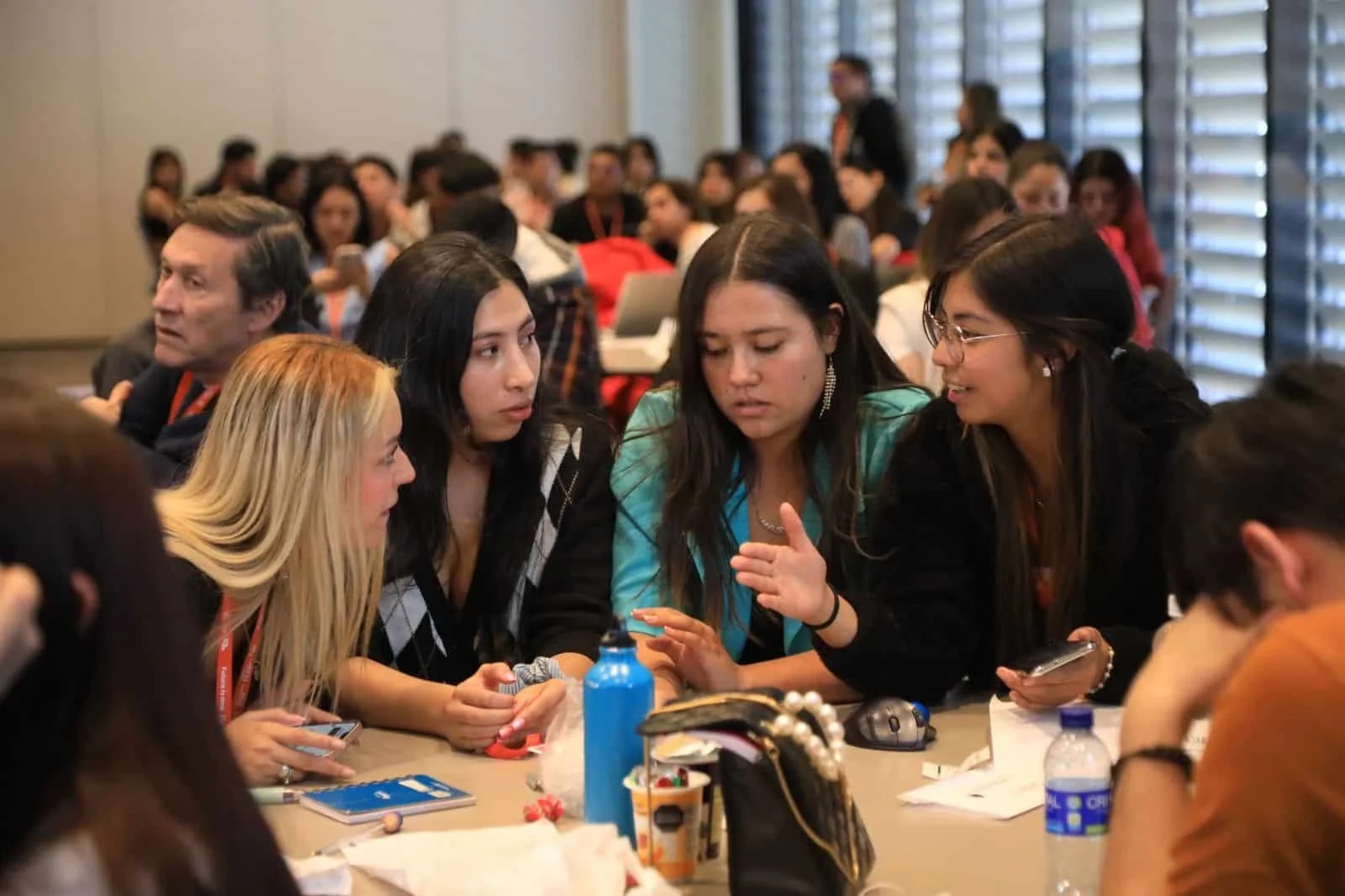
Every entrepreneurial ecosystem depends on connectors.
They may not always be the most visible figures and they are not always the founder, investor, policymaker, or academic. Often, they are the person or platform able to move between them. They understand the language of different worlds. They know which introduction matters. They recognise that an idea may need capital, but it may first need credibility, validation, advice, policy understanding, or simply someone willing to believe in it early.
“Connectors play a vital role in turning promising ideas into scalable solutions,” says Bannigan. “Innovation needs more than ambition. It needs access, trust, and the right conditions to grow. By linking entrepreneurs with investors, institutions, markets, and strategic partners, connectors help close gaps that often limit emerging and underrepresented founders.”
This is one of the strongest ideas within the REIN model as the connector does not replace the entrepreneur. They make the entrepreneur more legible to the systems that can support them.
“Promising ideas often fail to become businesses not because they lack potential, but because they lack the right conditions to grow,” she adds. “Entrepreneurs need more than creativity and ambition. They need mentors, networks, funding, institutional support, and early belief from people who can help move an idea forward.”
The recurring language is therefore a condition, not correction. REIN’s model is not built on the assumption that entrepreneurs are lacking talent but on the understanding that talent requires an environment in which to operate.
“An ecosystem works when it is fully supported by its community.”
“It depends on many different actors, resources, relationships, and small but important contributions working together,” Bannigan explains. “A strong ecosystem is not built by one institution or one individual alone.”
This is where entrepreneurship becomes less individualistic, and perhaps more realistic. The myth of the lone founder can be compelling, but the reality of building a business is rarely solitary. Every enterprise depends on invisible support systems, from regulation to finance, supply chains to storytelling, mentorship to market access. REIN’s focus is on making those systems visible and functional.
Trust as economic material
Trust is often spoken of as a cultural value, but within entrepreneurship it is also economic material. Without trust, capital hesitates and institutions withdraw. Founders guard their ideas, whilst partners avoid risk. Public and private actors remain in separate rooms. Early-stage innovation, by its nature, requires people to believe in something before it is fully proven.
“Trust is one of the central building blocks of any entrepreneurial ecosystem,” says Bannigan. “Without trust, it is very difficult for ideas to move forward, partnerships to form, or people to take the risks that entrepreneurship requires.”
This is particularly important in emerging ecosystems where founders may already be operating at a distance from traditional centres of capital and influence. Trust becomes the bridge between local knowledge and external opportunity. It is also why failure has to be part of the conversation.
Kerry continues: “It is important to communicate successes, but it is just as important to communicate failures, because failure provides valuable insight, helps others avoid the same mistakes, and creates a stronger foundation for future innovation.”
A mature ecosystem does not only circulate success stories. It circulates lessons and it has to. If failure cannot be named, it cannot instruct. If knowledge cannot move, mistakes are repeated in isolation. REIN’s emphasis on open communication between stakeholders suggests an understanding that innovation requires not only ambition, but feedback loops.
Why regional matters
REIN’s regional approach is not incidental. It is part of the thesis.
“The region's challenges and opportunities are deeply interconnected,” explains Bannigan. “You cannot fully address food security, climate resilience, or financial inclusion by working in just one country. The REIN regional model operating across Colombia, Guatemala, Costa Rica, Peru, and El Salvador was chosen because the ambition was always systemic change, not local wins.”
The regional model acknowledges that climate, materials, agriculture, waste, finance, and entrepreneurship do not respect neat borders. One country may produce a solution. Another may offer a market. A third may hold an investor network, while a fourth may contain a university or public institution capable of scaling the idea.
“Regional cooperation strengthens economic resilience because no economy exists in isolation,” she adds.
This is particularly relevant to the sectors in which many REIN entrepreneurs operate: circular materials, food systems, regenerative agriculture, sustainable packaging, biodiversity, biotechnology, and resilient infrastructure. These are not isolated industries, they are the systems that touch land, labour, logistics, policy, finance, design, and consumption.
The strength of REIN’s model is that it recognises entrepreneurship as part of a wider web.
From waste to value
Green Leaf Natural Fibers, founded by Jennifer Gonzalez, is one of the clearest examples of the kind of venture the ecosystem supports. Based in Colombia, the company transforms agricultural leftovers, mainly pineapple and banana leaves, into 100% plant-based, biodegradable natural fibres.
“After every pineapple harvest in Santander, farmers are left with mountains of leaf waste in the fields,” recounts Gonzalez. “The traditional solution was to burn it, releasing CO2, damaging the soil, and destroying something that had real potential. When we looked closer, we saw the same story repeating itself with banana crops in Isla Fuerte… That's the problem Green Leaf was built to solve.”
The company transforms agricultural waste into plant-based fibres. Its work begins from something physical and specific: the residue left behind after harvest, the knowledge held within rural communities, and the realisation that what had long been treated as waste could become a source of value.
“Because it was happening right here, in our own communities, every single season,” she continues. “The environmental damage was real and preventable. But beyond that, solving this problem was never just about reducing emissions. It was an opportunity to create income for farmers and artisans, generate meaningful work for rural women, and produce something the world genuinely needs.”
The power of Green Leaf lies in proximity as its innovation did not begin with a distant market trend, but with a problem visible in its own landscape. The fields were the evidence and the waste was the material. The community held part of the knowledge.
“We started with one crop, one region, and one question,” explains Gonzalez. “Could pineapple leaf waste be transformed into quality natural fiber at field level? Once we proved it could, the model began to grow.”
This is how local knowledge becomes scalable: not because it is detached from its origin, but because its method can travel.
Slow as a position
Green Leaf’s response to scale is particularly revealing.
In a global fashion system often shaped by speed, volume, and the compression of costs, Green Leaf’s language moves differently. It does not treat slowness as failure. It treats it as a deliberate condition of sustainability. Across Denude’s editorial work, this idea has appeared again and again: that slowness is not simply an aesthetic preference, but one of the conditions through which sustainability becomes deliberate, traceable, and real.
“So we made a deliberate choice: slow fashion, slow handcraft, at the pace our communities can sustain.”
“For us, viability and impact are inseparable,” says Gonzalez. “Our model only works if it makes financial sense for farmers, communities, and Green Leaf as a business… So we made a deliberate choice: slow fashion, slow handcraft, at the pace our communities can sustain. That is not a limitation we apologise for. It is a position we stand behind.”
What stands out is how deliberately Green Leaf approaches growth. The business wants to scale, but not at the cost of the people, landscape, and rhythm that give the work its integrity.
Green Leaf’s model raises a question that extends beyond Latin America: what forms of innovation are lost when the only measure of success is speed? And what might become possible when growth is designed around continuity, dignity, and place?
“That innovation here is fragile or needs to be imported,” she adds. “Green Leaf was born entirely from local knowledge… The solutions emerging from this region are rooted, creative, and uniquely suited to the challenges we face. The world is beginning to pay attention, and what they are discovering is that this was never an emerging story, it was always here.”
That final idea reaches beyond one company. It speaks to REIN’s wider proposition: that innovation is already present across the region, but that it needs infrastructure, recognition, and connection in order to scale.
A system entrepreneurs can rely on
Kerry Bannigan, President of the Board, PVBLIC Foundation, describes REIN as the result of a partnership that began with a methodology built in Colombia in 2019 and grew into something larger.
“In partnership, PVBLIC Foundation and CleantechHUB set out to prove that a methodology built in Colombia in 2019 could become something larger than a season of support; it could be a system entrepreneurs could actually rely on. Together, the teams have turned that proof into infrastructure across five countries, with governments, universities, and investors building alongside founders rather than around them. The measure of that work shows up in what those founders have built because of it, including ventures incubated, capital raised, jobs created, and ecosystems strengthened. That is REIN, the architecture we keep building together that is designed to outlast any single hub or funding cycle.”
The phrase “building alongside founders rather than around them” is quietly powerful. It suggests a model in which entrepreneurs are not decorative proof points for institutional ambition. They are the centre around which the system must be designed.
That may be the measure of whether an ecosystem works: not how impressive it appears from the outside, but whether the people building within it can rely on it. Looking ahead, REIN imagines success not only as capital raised or ventures launched, but as a shift in recognition.
“A region where the next generation of entrepreneurs does not have to fight to be seen,” she says, “where the infrastructure, the networks, and the trust are already in place, and where Latin American innovation is recognised globally not as an emerging story, but as a defining one.”
This is the larger proposition. Latin America is not simply participating in the future of innovation. It is helping shape what that future may require: not only invention, but infrastructure; not only ambition, but connection; not only growth, but resilience.
“What gives us optimism,” Bannigan concludes, “is the extraordinary talent, creativity, and determination I see across Latin America every day. Innovators here are developing practical, meaningful solutions to real challenges, and they are deeply rooted in the communities they serve… The ideas are already there. The ingenuity is already there. Latin America is reimagining what is possible, and that future is already well underway.”
Perhaps this is the real lesson of REIN that innovation is not only what is invented but what is made possible. And the future may belong not only to those who build companies, but to those who build the conditions in which companies, communities, and ideas can endure.